The Story of Errata for CentOS

Day 14 in the #vDM30in30 Image taken from Implementing Spacewalk into Company Infrastructure I’ve done a bunch of work with customers around patch management and packaging errata for CentOS, so I thought I’d talk about it a bit. What is errata? In the context of packaging, errata is basically listings from the package manager upstreams with updates for when CVE’s and vulnerabilities are found. So for official RHEL systems, this is available by default from the upstream, and the whole managed with Red Hat’s Satellite tool, which gets the information directly from RedHat’s infrastructure with your official paid login. ...
November 14, 2016 · 5 min · Peter Souter

Triggering a daemonized puppet agent with SIGUSR1

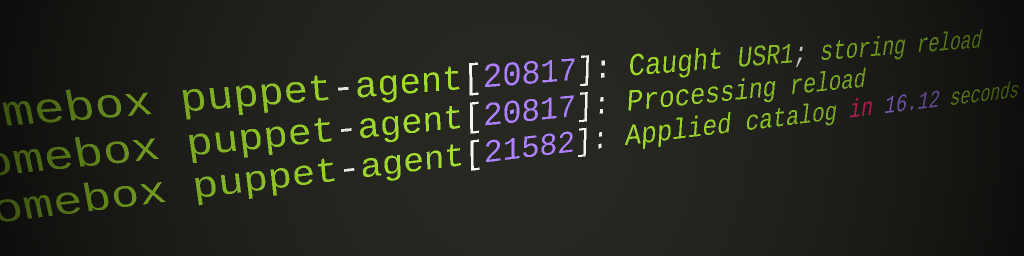
Day 13 in the #vDM30in30 Pretty quick one, but I thought I’d write it up because I hadn’t heard about it before. So, normally when trying to diagnose a puppet issue, one normally runs puppet agent -t or puppet agent --test. However, the --test flag comes with a set of predefined flags: –test Enable the most common options used for testing. These are ‘onetime’, ‘verbose’, ’no-daemonize’, ’no-usecacheonfailure’, ‘detailed-exitcodes’, ’no-splay’, ‘show_diff’, and ’no-use_cached_catalog’. ...

November 13, 2016 · 3 min · Peter Souter

SysOps: Welcome to the Club

Day 6 in the #vDM30in30 Header Source: https://flic.kr/p/HHgKu What is this? This is a post I wrote a year or so ago for SysAdvent 2015, but some issues came up and it didn’t get published. It’s basically about about welcoming new people to the world of SysOps and Sysadmin-ing, avoiding imposter syndrome and general tips about things to read and do to get used to the world of sysadmin-ing. SysOps: Welcome to the Club! Let’s talk about the old days. ...

November 6, 2016 · 9 min · Peter Souter